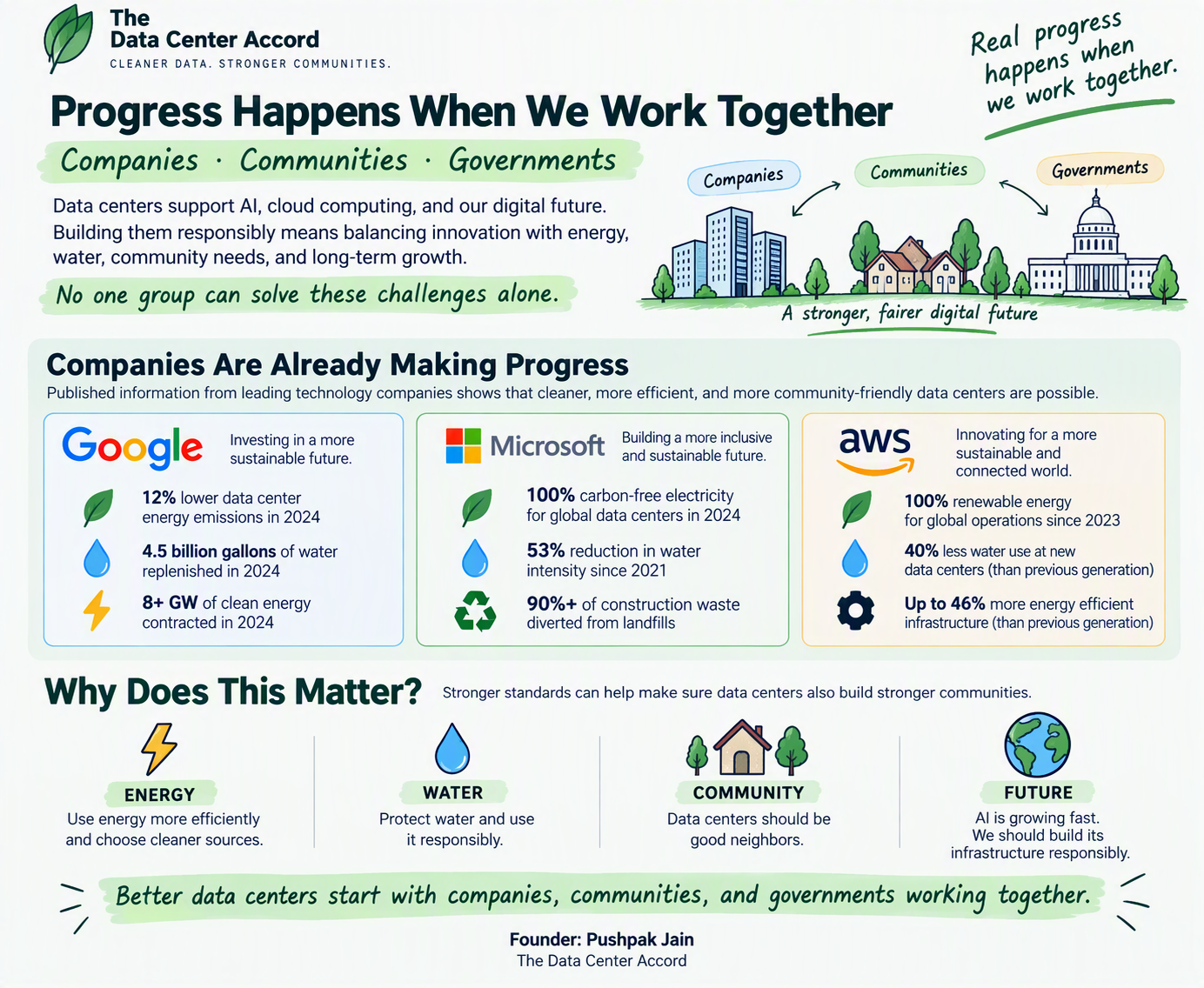
Growing up in Northern Virginia, I watched data centers transform the communities around me while powering the digital systems people rely on around the world. As AI adoption accelerated, conversations about energy demand, cooling infrastructure, transmission lines, grid reliability, and sustainability became increasingly common. Rather than seeing these as separate issues, I wanted to understand how they all connected.
Through AP Physics C: Mechanics and Electricity & Magnetism, I began to understand how energy moves through physical systems and how electrical infrastructure operates at scale. AP Calculus BC and Statistics gave me tools to model complex systems, analyze large amounts of data, and think about optimization. AP Chemistry added another perspective, helping me understand the role of materials, heat transfer, and cooling in real-world engineering challenges.
As I connected ideas from these subjects, I realized that many of the challenges facing modern data centers are fundamentally optimization problems: how do we balance power consumption, cooling requirements, reliability, cost, performance, and environmental impact at the same time?
That question inspired me to found The Data Center Accord, an initiative that collected and analyzed community feedback on energy use, water consumption, noise mitigation, sustainability, and grid impact. While researching potential solutions, I became fascinated by quantum computing and its potential to solve problems involving large numbers of interconnected variables.
To explore those ideas further, I completed MIT quantum computing coursework and participated in quantum hackathons, including MIT iQuHACK, where my team placed fourth. What began as curiosity about the infrastructure changing my community grew into a deeper interest in the intersection of physics, mathematics, computer science, and engineering. More importantly, it taught me that the most meaningful technologies are not developed in isolation they emerge when we use knowledge from multiple disciplines to solve real problems affecting people around us and around the world.
We all care about building a more sustainable AI future, I invite you to contribute at
Source : https://github.com/pushiscool/future-quantum-designs