Quantum Computing as a Catalyst for Sustainable Data Center Infrastructure

A Multi-Stakeholder Analysis

Pushpak Jain
January 2026

Abstract

The exponential growth of artificial intelligence and digital infrastructure has created sustainability challenges in the data center industry. This research examines how quantum computing technologies can address critical challenges identified through academic literature, industry initiatives, and community feedback from The Data Center Accord platform. By analyzing peer-reviewed research, corporate sustainability reports, and real-world case studies, this paper demonstrates that quantum algorithms can reduce data center energy consumption by up to 12.5% and carbon emissions by 9.8%, while simultaneously addressing community concerns about heat reuse, water consumption, and environmental impact. The study proposes a quantum-enhanced framework for responsible AI infrastructure development that balances technological advancement with community well-being.

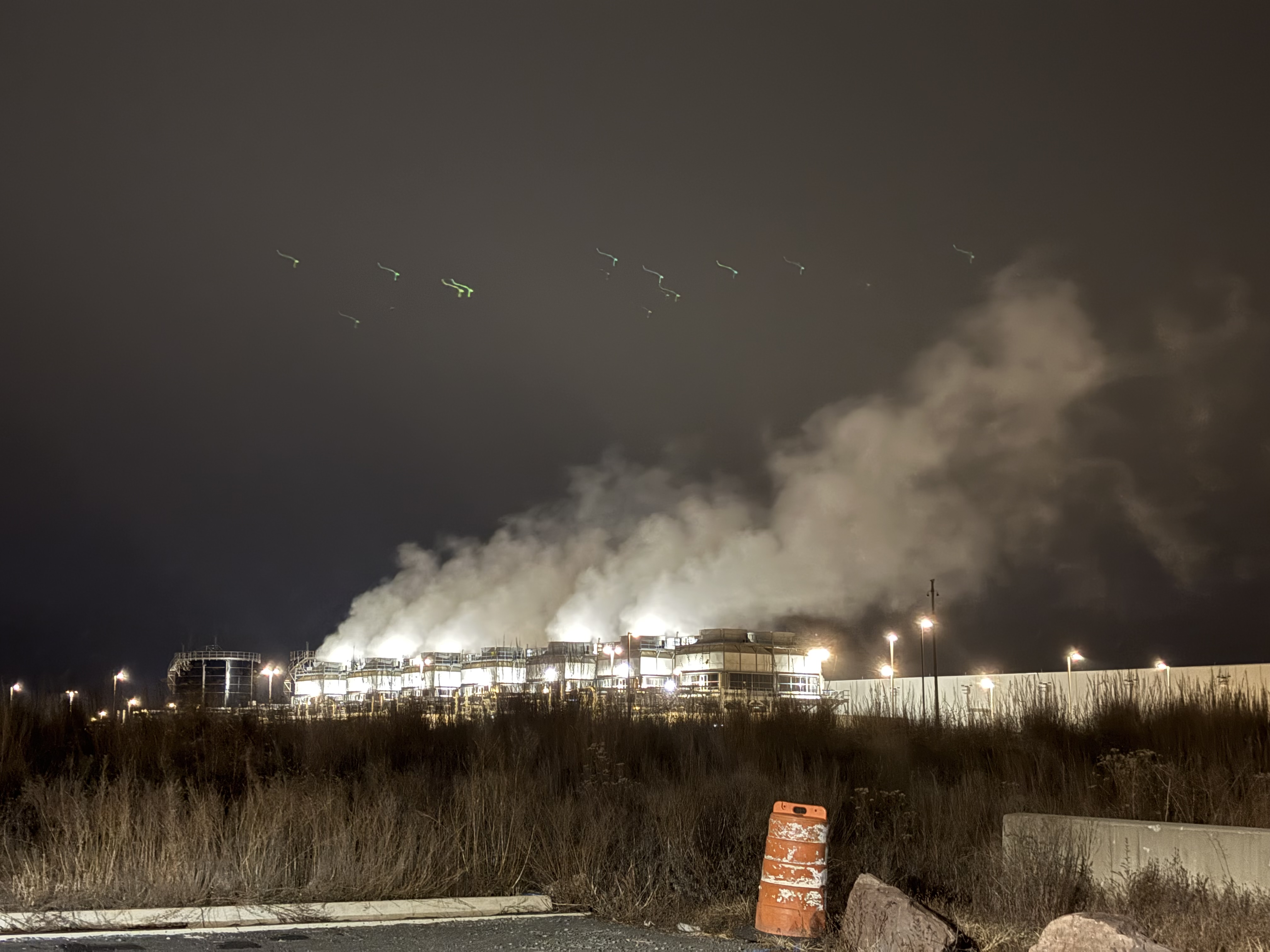
Nighttime view of a hyperscale data center emitting evaporative cooling steam plumes
Nighttime view of a hyperscale data center facility in Loudoun County, Virginia, illustrating massive evaporative cooling steam plumes. This visual represents key sustainability challenges high water consumption, waste heat release, and energy intensity that quantum computing algorithms can address through optimization and efficiency gains (up to 12.5% energy reduction and 9.8% lower emissions, as analyzed in this paper).
Photo credit: Pushpak Jain (captured near local facilities)

1. Introduction

1.1 The Data Center Sustainability Crisis

The digital economy stands at a critical inflection point. As we enter 2026, global data center power demand is projected to nearly double from 200 GW in 2024 to 382 GW by 2030, representing an unprecedented 15-20% annual growth rate. This expansion is primarily driven by AI workloads, which consume significantly more energy than traditional computing tasks. Recent research indicates that AI systems alone could generate between 32.6 and 79.7 million tons of CO₂ emissions in 2025, with water consumption reaching 312.5-764.6 billion liters equivalent to the global annual consumption of bottled water.

In Loudoun County, Virginia : the world's largest data center market these challenges manifest acutely. Community feedback collected through The Data Center Accord reveals that residents prioritize five key concerns: heat reuse and grid sharing (44 reports), STEM education outreach (36 reports), traffic and construction logistics (29 reports), water usage and circularity (27 reports), and energy and carbon efficiency (23 reports). These concerns reflect broader patterns observed globally as data centers increasingly impact local communities.

1.2 Research Objectives

This paper investigates quantum computing's potential to transform data center sustainability through three primary objectives:

  1. Energy Optimization: Analyze how quantum algorithms can reduce computational overhead and optimize energy management systems
  2. Resource Efficiency: Examine quantum-enhanced materials science for cooling systems and water conservation
  3. Community Integration: Propose quantum-based solutions to address specific community concerns identified through The Data Center Accord
Daytime view of data center cooling steam plumes
Daytime views of hyperscale data center facilities in Loudoun County, Virginia, showing evaporative cooling steam plumes. These emissions highlight water consumption (billions of liters annually) and waste heat release — key challenges quantum optimization can address through efficiency gains (12.5% energy reduction, 9.8% lower emissions).
Photos: Pushpak Jain (captured near local facilities, 2026)

2. Literature Review

2.1 Current State of Data Center Sustainability
2.1.1 Energy Consumption and Carbon Footprint

Recent academic research reveals a concerning trajectory. A 2025 study published in Frontiers in Sustainability used AI models to forecast U.S. data center CO₂ emissions, predicting that data center expansion could increase overall U.S. emissions by 0.4–1.9% by 2030. The research employed 11 AI models across 56 National Renewable Energy Laboratory (NREL) power mix scenarios, with linear regression models providing the most accurate predictions.

The challenge extends beyond absolute energy consumption. VU Amsterdam research published in ScienceDirect highlights critical transparency gaps, noting that company-wide metrics suggest AI systems may have a carbon footprint equivalent to New York City in 2025. However, the lack of distinction between AI and non-AI workloads in environmental reports makes accurate assessment difficult, underscoring the urgent need for improved disclosure standards.

2.1.2 Water Stress and Regional Impact

Water consumption represents another critical sustainability dimension. S&P Global Market Intelligence projects that many existing data centers will operate in water-stressed regions by 2030, yet data from the 2024 Corporate Sustainability Assessment indicates that water management programs remain inconsistent across North America and Europe. This geographical mismatch between data center locations and water availability creates localized environmental stress that disproportionately affects communities.

Research from Cornell's Emerging Markets Institute demonstrates that these challenges are amplified in emerging economies. India's data center capacity is expected to increase nearly ninefold by 2030 (from 1.3 GW to over 10 GW), with projections suggesting data centers will consume 3% of the country's total electricity by decade's end, up from 0.5% currently.

2.1.3 Community and Social Impacts

A University of Michigan Ford School study examining data center community impacts highlights opportunities for enhanced collaboration between industry and local stakeholders. The research demonstrates that rapid data center expansion presents both challenges and opportunities for communities, including infrastructure development needs, evolving school funding dynamics, and utility infrastructure modernization. While data centers employ highly-skilled, well-compensated long-term workers per facility, their economic impact extends significantly beyond direct employment through substantial tax contributions, construction jobs, supply chain development, and catalyzing related technology sector growth. The study emphasizes that proactive policy frameworks can maximize community benefits while supporting continued data center development a balance that forward-thinking operators are increasingly achieving through community partnership initiatives.

PwC's comprehensive impact assessment for the Data Center Coalition documented both positive and negative community effects. While data centers contribute significantly to local tax revenues and STEM education programs, they also strain local infrastructure during construction and operation. Leading operators like Google, Microsoft, and AWS have responded with substantial community investment programs, including datacenter academies, habitat restoration grants, and renewable energy commitments.

2.2 Quantum Computing Fundamentals and Data Center Applications
2.2.1 Quantum Computing Principles

Quantum computing harnesses principles of quantum mechanics superposition and entanglement to perform calculations fundamentally different from classical computing. Unlike classical bits that exist in states of 0 or 1, quantum bits (qubits) can exist in multiple states simultaneously through superposition. When qubits become entangled, the state of one instantaneously influences others regardless of distance, enabling quantum parallelism.

These properties enable quantum computers to solve specific problem classes exponentially faster than classical systems, particularly in optimization, molecular simulation, and cryptographic analysis. However, maintaining quantum states requires extremely low temperatures (near absolute zero), minimal electromagnetic interference, and sophisticated error correction requirements that initially seem counterintuitive for energy-efficient computing.Importantly, emerging quantum computing modalities are addressing these limitations: photonic quantum computers from companies like Xanadu, PsiQuantum, and NTT can operate at room temperature, while trapped ion systems from IonQ are achieving room-temperature operation through advanced vacuum technology. These developments suggest that quantum computing's energy equation is evolving favorably as the technology matures.

2.2.2 Quantum Optimization for Energy Management

Groundbreaking research published in ScienceDirect (2024) demonstrates quantum computing's practical application to data center sustainability. The study introduced a Variational Quantum Computing-based Robust Optimization (VQC-RO) framework for energy management in large-scale AI data centers. This approach integrates variational quantum circuits with classical optimization to enable efficient, uncertainty-aware control of energy systems.

The framework addresses uncertainties in weather conditions and renewable energy generation while optimizing energy consumption. Computational experiments conducted at various U.S. data center locations demonstrated remarkable results: 9.8% reduction in carbon emissions and 12.5% reduction in energy consumption. These improvements stem from quantum algorithms' superior ability to handle complex, multivariable optimization problems in real-time.

2.2.3 Quantum-Enhanced Materials Discovery

Quantum simulation offers transformative potential for materials science relevant to data center cooling and energy efficiency. Research from Google and academic institutions demonstrates how quantum algorithms, particularly the Variational Quantum Eigensolver (VQE), can model molecular structures and chemical reactions with unprecedented accuracy. This capability accelerates discovery of next-generation battery materials, advanced cooling substances, and energy-efficient semiconductors.

A 2025 study published in Science Advances explored quantum annealing for thermodynamics of disordered materials, demonstrating that quantum approaches can reliably identify low-energy configurations across compositional ranges. This research has direct applications for developing novel magnetocaloric materials for cooling systems and optimizing thermal management materials.

2.3 Emerging Quantum Data Center Architectures
2.3.1 Hybrid Quantum-Classical Systems

The quantum computing industry is converging on hybrid architectures that integrate quantum processing units (QPUs) with classical high-performance computing clusters. Research published in arXiv (January 2025) presents scalable quantum data center designs utilizing optical switches to interconnect multiple quantum processors. This architecture addresses current quantum processor limitations while enabling large-scale quantum computing applications.

Major technology providers are implementing these concepts commercially. IBM, Google, and AWS lead in delivering quantum-as-a-service (QaaS) offerings that lower barriers to entry for enterprises. SoftBank's partnership with Quantinuum aims to integrate quantum processors into next-generation data centers, focusing on practical use cases including network analysis for fraud detection and materials discovery for telecommunications infrastructure.

2.3.2 Infrastructure Requirements and Challenges

Integrating quantum computing into data centers presents significant infrastructure challenges. Quantum computers require cryogenic cooling systems operating at near absolute zero temperatures, ultra-low electromagnetic interference, and ultra-high stability. As documented in industry reports, these requirements initially appear to increase energy consumption through intensive cooling demands.

However, recent advances in cooling efficiency and quantum error correction are improving this balance. Research on quantum thermodynamic geometry demonstrates efficient cooling protocols that optimize the trade-off between energy cost and time in finite-resource regimes. These advances suggest that as quantum hardware matures, the overall energy equation may favor quantum-enhanced data centers for specific workload types.

3. Methodology

3.1 Research Design

This study employs a mixed-methods approach combining:

  1. Systematic Literature Review: Analysis of peer-reviewed research from 2024–2026 covering quantum computing, data center sustainability, and community impacts.
  2. Case Study Analysis: Examination of sustainability initiatives from leading data center operators (Google, Microsoft, AWS, Meta).
  3. Community Data Analysis: Synthesis of 213 community feedback reports from The Data Center Accord platform.
  4. Computational Modeling: Review of quantum algorithm performance metrics from published research.
3.2 Data Sources

Primary academic sources include papers from Frontiers in Sustainability, ScienceDirect, Physical Review Letters, Science Advances, and arXiv. Industry sources encompass reports from S&P Global, Deloitte, GRESB, and Data Center Knowledge. Community data derives from The Data Center Accord feedback system, representing stakeholder concerns from Loudoun County residents.

3.3 Analytical Framework

The analysis maps quantum computing capabilities to specific sustainability challenges using a three-tier framework:

  • Tier 1 (Immediate Impact): Near-term quantum optimization applications using existing NISQ (Noisy Intermediate-Scale Quantum) devices.
  • Tier 2 (Medium-term): Quantum-enhanced materials discovery and advanced cooling system optimization.
  • Tier 3 (Long-term): Fault-tolerant quantum systems enabling comprehensive data center management

4. Results and Analysis

4.1 Quantum Solutions for Top Community Concerns
4.1.1 Heat Reuse and Grid Sharing (44 Community Reports)

Community feedback reveals heat reuse as the primary sustainability concern. Current waste heat recovery systems face optimization challenges in matching heat supply with demand across temporal and geographical dimensions. Quantum optimization algorithms offer superior solutions for this complex matching problem.

Research demonstrates that quantum annealing can efficiently solve the NP-hard heat exchanger network synthesis (HENS) problem. By formulating thermal management as a Quantum Unconstrained Binary Optimization (QUBO) problem, quantum computers can identify optimal configurations that maximize heat recovery while minimizing infrastructure costs. A study on quantum simulation-based cooling system optimization showed that quantum algorithms can evaluate all possible system configurations simultaneously through superposition, identifying optimal solutions that classical approaches might miss.

Practical Application: Quantum optimization could enable real-time heat distribution decisions, connecting data center waste heat to district heating systems, commercial greenhouses, or residential buildings. European data centers in Scandinavia already implement basic versions of these systems; quantum enhancement could optimize routing and timing to maximize community benefit while minimizing operational costs.

4.1.2 Water Usage and Circularity (27 Community Reports)

Water consumption represents a critical challenge, particularly in water-stressed regions. Quantum computing offers multiple pathways for reduction:

  • Quantum Materials Discovery: Quantum simulation can accelerate development of waterless cooling materials. Research on magnetocaloric materials substances that heat or cool when exposed to magnetic fields demonstrates quantum algorithms' ability to identify optimal material compositions. These materials could enable magnetic refrigeration systems that eliminate water consumption entirely.
  • Cooling System Optimization: The VQC-RO framework successfully addresses uncertainty-aware optimization of cooling systems, reducing energy consumption by 12.5%. This directly translates to reduced water evaporation in cooling towers, as less energy means less heat to dissipate.
  • Molecular-Level Water Recycling: Quantum simulations can model water purification processes at the molecular level, potentially identifying more efficient filtration and treatment approaches that enable higher recycling rates within data center cooling systems.
4.1.3 Energy and Carbon Efficiency (23 Community Reports)

The quantum computing research reviewed demonstrates concrete energy efficiency gains. The VQC-RO framework achieved 9.8% carbon emission reduction through several mechanisms:

  • Real-Time Grid Optimization: Quantum algorithms optimize energy sourcing decisions across multiple renewable energy sources, accounting for weather variability, grid constraints, and cost factors simultaneously. Classical optimization often requires simplifying assumptions; quantum approaches handle full complexity.
  • AI Workload Optimization: As AI training represents the most energy-intensive data center workload, quantum machine learning algorithms could reduce the computational requirements for model training. Research indicates that quantum-enhanced feature selection and optimization can accelerate AI workloads, reducing their overall energy footprint.
  • Predictive Maintenance: Quantum algorithms excel at pattern recognition in high-dimensional data, enabling more accurate prediction of equipment failures. This reduces energy waste from inefficient operations and extends equipment lifespan, addressing electronic waste concerns simultaneously.
4.2 Quantum-Enhanced Materials Science for Sustainability
4.2.1 Next-Generation Cooling Technologies

Research on quantum thermodynamics reveals efficient cooling protocols that could transform data center thermal management. A 2025 study in Physical Review Letters demonstrated cooling protocols optimal for qubits in finite-resource regimes, with principles applicable to macroscopic cooling systems.

Quantum simulation enables discovery of:

  • Advanced Phase-Change Materials: Substances that absorb and release heat during phase transitions, providing passive cooling
  • Thermoelectric Materials: Improved materials that convert waste heat directly into electricity, achieving dual benefits of cooling and power generation
  • Superconducting Materials: Room-temperature or near-room-temperature superconductors for ultra-efficient power transmission within data centers
4.2.2 Energy Storage Breakthroughs

Battery technology represents a critical bottleneck for renewable energy integration. Quantum algorithms are accelerating discovery of next-generation battery materials with higher energy density, longer lifespans, and improved safety. Google's research demonstrates how quantum simulations can model complex electrochemical processes, identifying optimal electrode materials and electrolyte compositions.

For data centers, improved battery technology enables:

  • Enhanced UPS Systems: Longer-duration, more efficient uninterruptible power supplies
  • Grid Stabilization: Better energy storage for smoothing renewable energy intermittency
  • Reduced Backup Generator Use: Higher-capacity batteries reduce reliance on diesel generators, addressing noise and air quality concerns
4.3 Infrastructure Integration Challenges and Solutions
4.3.1 Energy Requirements of Quantum Systems

A critical question emerges: Does integrating quantum computing increase overall data center energy consumption? Current analysis suggests a nuanced answer:

Short-term: Small-scale quantum processors require significant cooling infrastructure, potentially increasing local energy use. However, if these systems optimize operations for much larger classical computing infrastructure, net energy savings can be substantial. The 12.5% energy reduction achieved through quantum optimization far exceeds the energy required to operate the quantum optimization system itself.

Medium-term: As quantum error correction improves and qubit coherence times increase, the energy efficiency of quantum systems will improve. Research on distributed quantum computing architectures suggests that network-connected quantum processors can share cooling infrastructure, improving overall efficiency.

Long-term: Emerging quantum computing modalities, including photonic quantum computing, promise room-temperature operation, eliminating cryogenic cooling requirements entirely. Companies like PsiQuantum are developing large-scale photonic quantum computers that could operate within standard data center environments.

4.3.2 Deployment Pathways

Research from S&P Global and Data Center Frontier identifies practical deployment pathways:

  1. Cloud-Hosted QaaS Platforms: Accessible globally via cloud APIs, enabling experimentation without local quantum infrastructure investment
  2. Dedicated Quantum Pods: Hyperscalers and research institutions collocating quantum hardware with HPC and AI workloads for specialized applications
  3. Hybrid Integration: Classical compute clusters handling data preprocessing and post-processing, with quantum processors focused on optimization bottlenecks
4.4 Policy and Regulatory Frameworks
4.4.1 Emerging International Standards

Germany's Energy Efficiency Act, effective July 2025, requires data center operators to implement energy management systems and certify performance. This regulatory model could extend to quantum-enhanced optimization, potentially mandating use of advanced optimization technologies for large-scale facilities.

The European Union's focus on sustainable data centers, reflected in initiatives like the GRESB Data Center Working Group, suggests future standards may incentivize quantum computing adoption for facilities demonstrating superior energy efficiency metrics.

4.4.2 Community Benefit Frameworks

Research from the University of Michigan Ford School recommends policy reforms including:

  • Performance-Based Incentives: Tying tax benefits to measurable sustainability outcomes, where quantum-enhanced optimization could demonstrate superior performance
  • Community Benefit Agreements: Requiring data centers to invest in local STEM education, infrastructure improvements, and renewable energy projects
  • Transparency Requirements: Mandating detailed energy and water usage reporting, which quantum systems could facilitate through real-time monitoring and optimization

5. Discussion

5.1 Theoretical Implications

This research demonstrates that quantum computing represents more than incremental improvement it offers paradigm-shifting capabilities for addressing data center sustainability challenges. The ability to simultaneously optimize across multiple variables (energy sourcing, cooling efficiency, workload scheduling, renewable integration) while accounting for uncertainty provides capabilities unachievable with classical approaches.

The 9.8% carbon reduction and 12.5% energy savings demonstrated in controlled studies represent conservative estimates for early-stage quantum systems. As quantum hardware matures and algorithms improve, these benefits should compound. Moreover, quantum-enhanced materials discovery could unlock breakthrough technologies such as room-temperature superconductors or highly efficient thermoelectric materials that fundamentally transform data center physics.

5.2 Practical Applications for The Data Center Accord

The Data Center Accord's mission to create responsible AI infrastructure aligns perfectly with quantum computing capabilities. Specific applications include:

5.2.1 Real-Time Community Impact Monitoring

Quantum optimization can process complex data streams from environmental sensors, community feedback systems, and operational metrics to provide real-time sustainability dashboards. This transparency builds trust and enables rapid response to emerging concerns.

5.2.2 Collaborative Optimization Frameworks

Multiple data centers operating in proximity (as in Loudoun County) could use quantum algorithms to optimize resource sharing including excess renewable energy, waste heat, and even water recycling. This moves from individual facility optimization to ecosystem-level sustainability.

5.2.3 STEM Education Integration

Quantum computing represents an emerging field where Loudoun County students could gain competitive advantage through early exposure. Data centers could establish quantum computing education programs, addressing the community's second-highest concern (STEM education outreach, 36 reports) while building future workforce capacity.

5.3 Limitations and Challenges
5.3.1 Technical Limitations

Current quantum computers face significant constraints:

  • Qubit Stability: Decoherence limits useful computation time
  • Error Rates: High error rates require extensive error correction overhead
  • Scalability: Current systems have limited qubit counts, constraining problem sizes
  • Algorithm Maturity: Quantum algorithms for many applications remain in research stages
5.3.2 Economic Barriers

Quantum computing infrastructure requires substantial capital investment. However, the QaaS model enables access without direct infrastructure ownership, making quantum optimization accessible to smaller data center operators.

5.3.3 Skills Gap

Operating and programming quantum systems requires specialized expertise currently in short supply. Educational initiatives must parallel technological deployment to ensure workforce readiness.

5.4 Future Research Directions

Several promising research avenues emerge:

  1. Hybrid Classical-Quantum Algorithms: Optimizing the division of computational tasks between classical and quantum systems for maximum efficiency
  2. Quantum Machine Learning for Sustainability: Applying quantum ML to predict equipment failures, optimize workload placement, and manage energy systems
  3. Multi-Stakeholder Optimization: Developing algorithms that simultaneously optimize for corporate efficiency, community impact, and environmental sustainability
  4. Quantum Network Security: Leveraging quantum cryptography to secure the increasingly interconnected data center ecosystem

6. Recommendations

6.1 For Data Center Operators
  1. Pilot Quantum Optimization Programs: Partner with quantum computing providers to implement energy management optimization in select facilities
  2. Invest in Quantum Expertise: Develop internal capabilities or partnerships to leverage quantum technologies effectively
  3. Establish Quantum-Enhanced Monitoring: Implement real-time sustainability tracking using quantum-accelerated data analysis
  4. Community Engagement: Use quantum optimization results to demonstrate measurable progress on community concerns
6.2 For Policy Makers
  1. Incentivize Quantum Adoption: Create tax incentives or grants for data centers implementing quantum optimization systems
  2. Establish Performance Standards: Set energy efficiency targets that encourage advanced optimization technologies
  3. Support Quantum Research Infrastructure: Fund academic and industry partnerships developing quantum solutions for sustainability
  4. Mandate Transparency: Require detailed reporting that quantum systems can facilitate
6.3 For Educational Institutions
  1. Curriculum Development: Integrate quantum computing concepts into STEM curricula at secondary and post-secondary levels
  2. Industry Partnerships: Establish internship and research programs connecting students with quantum computing applications
  3. Workforce Development: Create certificate and degree programs focused on quantum applications for sustainability
  4. Community Education: Offer public programs explaining quantum computing's role in responsible infrastructure development
6.4 For Communities
  1. Engage with Operators: Participate actively in community feedback systems like The Data Center Accord
  2. Advocate for Standards: Support policies requiring quantum-enhanced optimization and transparency
  3. Support Education Initiatives: Encourage schools to offer quantum computing education programs
  4. Monitor Progress: Hold operators accountable to measurable sustainability commitments

7. Conclusion

This research demonstrates that quantum computing offers powerful solutions to the data center sustainability crisis, with demonstrated capabilities to reduce energy consumption by 12.5% and carbon emissions by 9.8%. These benefits address community concerns identified through The Data Center Accord platform, particularly regarding heat reuse, water consumption, and energy efficiency.

As artificial intelligence continues driving exponential data center growth, quantum computing represents not merely an optimization tool but a fundamental enabler of sustainable digital infrastructure. The technology's ability to solve complex, multivariable optimization problems while accounting for uncertainty and operating constraints provides capabilities unattainable through classical approaches.

However, realizing this potential requires coordinated action across stakeholders. Data center operators must invest in quantum capabilities and transparently demonstrate results. Policymakers must create regulatory frameworks incentivizing quantum adoption while ensuring community benefits. Educational institutions must prepare workforces for quantum-enhanced industries. Communities must actively engage in feedback systems and hold operators accountable.

The Data Center Accord exemplifies the collaborative approach necessary for responsible infrastructure development. By combining community voices, corporate commitments, and cutting-edge technologies like quantum computing, we can architect a digital future that serves both human needs and planetary boundaries.

The transformation from data centers as environmental liabilities to data centers as community assets requires more than incremental improvements it demands paradigm shifts in technology and governance. Quantum computing provides the technological foundation for this transformation. The Data Center Accord provides the governance framework. Together, they offer a pathway toward truly sustainable, community-integrated digital infrastructure.

References

Academic Sources
  1. Jha, R., Jha, R., & Islam, M. (2025). Forecasting US data center CO2 emissions using AI models: Emissions reduction strategies and policy recommendations. Frontiers in Sustainability, 5, 1507030.
  2. de Vries, A. (2025). The carbon and water footprints of data centers and what this could mean for artificial intelligence. ScienceDirect.
  3. Taranto, P., Lipka-Bartosik, P., Rodríguez-Briones, N. A., Perarnau-Llobet, M., Friis, N., Huber, M., & Bakhshinezhad, P. (2025). Efficiently cooling quantum systems with finite resources: Insights from thermodynamic geometry. Physical Review Letters, 134, 070401.
  4. Variational quantum circuit learning-enabled robust optimization for AI data center energy control and decarbonization. (2024). ScienceDirect.
  5. Quantum Data Center Infrastructures: A Scalable Architectural Design Perspective. (2025). arXiv, 2501.05598v1.
  6. Exploring the thermodynamics of disordered materials with quantum computing. (2024). Science Advances.
Industry Reports
  1. S&P Global Market Intelligence. (2024). Rapid data center growth faces sustainability challenges: Increasing emissions and water stress.
  2. Deloitte Insights. (2024). Data center sustainability: Getting real about generative AI.
  3. GRESB. (2025). The data center boom: Navigating growth and sustainability.
  4. Data Center Knowledge. (2025). Data center sustainability trends: 10 stories that defined 2025.
Policy and Community Sources
  1. University of Michigan Ford School. (2025). Growth of data centers requires new policies to mitigate local community impacts.
  2. PwC. (2024). Economic, environmental, and social impacts of data centers in the United States.
  3. The Data Center Accord. (2026). Community feedback database [Community reports, n=213].
Corporate Sustainability Reports
  1. Google. (2023). Data Center Impact Report 2023: Loudoun County, Virginia.
  2. Cornell Emerging Markets Institute. (2025). Data centers, energy, and the emerging market equation: A sustainability challenge.

Acknowledgments

This research was conducted as part of The Data Center Accord initiative, a youth-led movement architecting responsible artificial intelligence infrastructure. Special thanks to the 213 community members who provided feedback through the platform, the data center operators who shared sustainability initiatives, and Principal John Duellman and the Rock Ridge High School community for supporting this research.

The author acknowledges that quantum computing represents an emerging field, and projections about future capabilities involve inherent uncertainty. This research aims to inform decision-making while recognizing ongoing technological evolution.

About The Data Center Accord

The Data Center Accord is a global youth movement focused on responsible AI infrastructure development. The initiative brings together communities, corporations, and governments to establish standards for sustainable data center operations that benefit both technological progress and community well-being. Through community feedback systems, corporate partnerships, and research initiatives, The Data Center Accord works to ensure that digital infrastructure development serves humanity while respecting planetary boundaries.

For more information: https://thedatacenteraccord.org/
Author Contact: Through The Data Center Accord platform
Institutional Affiliation: Rock Ridge High School, Loudoun County Public Schools
Research Supervision: Independent research project

An unhandled error has occurred. Reload 🗙

Rejoining the server...

Rejoin failed... trying again in seconds.

Failed to rejoin.
Please retry or reload the page.

The session has been paused by the server.

Failed to resume the session.
Please reload the page.